Physical Address
304 North Cardinal St.
Dorchester Center, MA 02124
Physical Address
304 North Cardinal St.
Dorchester Center, MA 02124

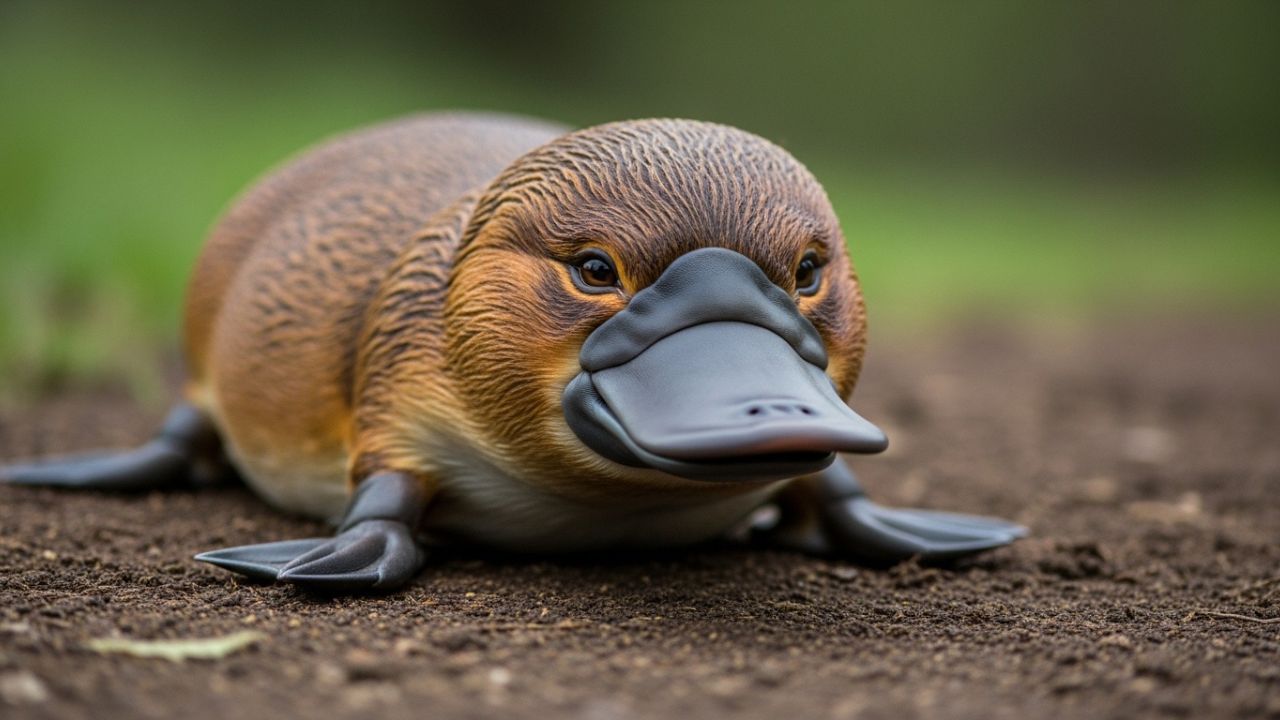
The platypus is one of the most unusual mammals on Earth. Native to eastern Australia and Tasmania, this remarkable creature combines traits that seem almost impossible in a single animal. With the bill of a duck, the body of an otter, and the tail of a beaver, the platypus has puzzled scientists for centuries.
Classified as a monotreme, the platypus is one of only a few mammals that lay eggs instead of giving birth to live young. Its scientific name, Ornithorhynchus anatinus, reflects its distinctive bird-like snout.
The platypus has a streamlined body adapted for swimming. Its dense, waterproof fur keeps it warm in cold water, while its webbed feet make it an excellent swimmer. Key features include:
A broad, flat bill used for detecting prey
Webbed front feet for propulsion in water
A flat tail for fat storage and balance
Short legs and sharp claws for digging burrows
Adult platypuses typically weigh between 0.7 and 2.4 kilograms (1.5–5.3 pounds), with males generally larger than females.
One of the most surprising characteristics of the platypus is that males possess venomous spurs on their hind legs. While not lethal to humans, the venom can cause severe pain. Scientists believe these spurs are used during mating season to compete with rival males.
The platypus is found in freshwater rivers, lakes, and streams in eastern Australia and the island state of Tasmania. It prefers areas with stable riverbanks, which allow it to dig burrows for nesting and shelter.
Platypuses are semi-aquatic animals. They spend much of their time in the water hunting for food but retreat to burrows along riverbanks for rest and protection. Their bodies are perfectly adapted for underwater foraging.
The platypus primarily feeds on:
Insect larvae
Freshwater shrimp
Worms
Small crustaceans
Interestingly, the platypus does not have teeth. Instead, it uses horny plates in its mouth to grind food.
The platypus uses a special ability called electroreception to locate prey. Its bill contains sensitive receptors that detect electrical signals produced by muscle movements of small aquatic animals. This ability allows the platypus to hunt effectively even with its eyes, ears, and nostrils closed underwater.
Unlike most mammals, the platypus lays eggs. It belongs to a small group of egg-laying mammals known as monotremes. Females lay one to three eggs and incubate them in a burrow.
After hatching, the young platypuses (called puggles) rely on their mother’s milk. However, the platypus does not have nipples; instead, milk is secreted through special glands and absorbed by the young from the mother’s fur.
In the wild, platypuses can live up to 10–15 years, while some in captivity have lived longer under protected conditions.
When European scientists first encountered the platypus in the late 18th century, many believed it was a hoax because of its strange appearance. Over time, research confirmed its authenticity and revealed its significance in understanding mammalian evolution.
The platypus provides insight into:
The evolution of mammals
The development of egg-laying versus live birth
Genetic diversity among early mammalian species
Its unique combination of reptilian and mammalian traits makes it a key subject in evolutionary biology.
Although not currently classified as endangered globally, platypus populations face several threats, including:
Habitat destruction
Water pollution
Climate change
Drought and bushfires
Changes in freshwater ecosystems directly impact platypus survival, as they depend heavily on clean water and abundant aquatic life.
Efforts to protect the platypus include:
Monitoring river health and water quality
Protecting riparian habitats
Conducting research and population surveys
Public awareness campaigns in Australia
Environmental groups and Australian wildlife authorities continue working to ensure the platypus remains a thriving species.
The platy pus is one of only five monotreme species in the world.
It has ten sex chromosomes, compared to two in humans.
Platypuses close their eyes and ears while swimming underwater.
They can stay submerged for about 30–60 seconds at a time.
The platy pus is considered a national symbol of Australia and appears on Australian currency.
The platy pus stands as one of nature’s most extraordinary creations. With its duck-like bill, egg-laying reproduction, venomous spurs, and electroreception abilities, it challenges traditional definitions of mammals. Native to Australia and Tasmania, this unique species continues to fascinate scientists and wildlife enthusiasts alike.
Understanding the platy pus not only highlights the incredible diversity of life on Earth but also underscores the importance of conservation efforts to protect freshwater habitats. By preserving ecosystems and supporting environmental initiatives, we can ensure that the platy pus remains a living symbol of evolutionary wonder for generations to come.